
Sept. 9, 2026
By KENNETH J. BRADDICK
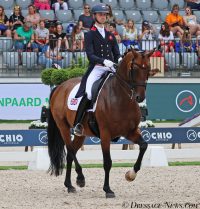
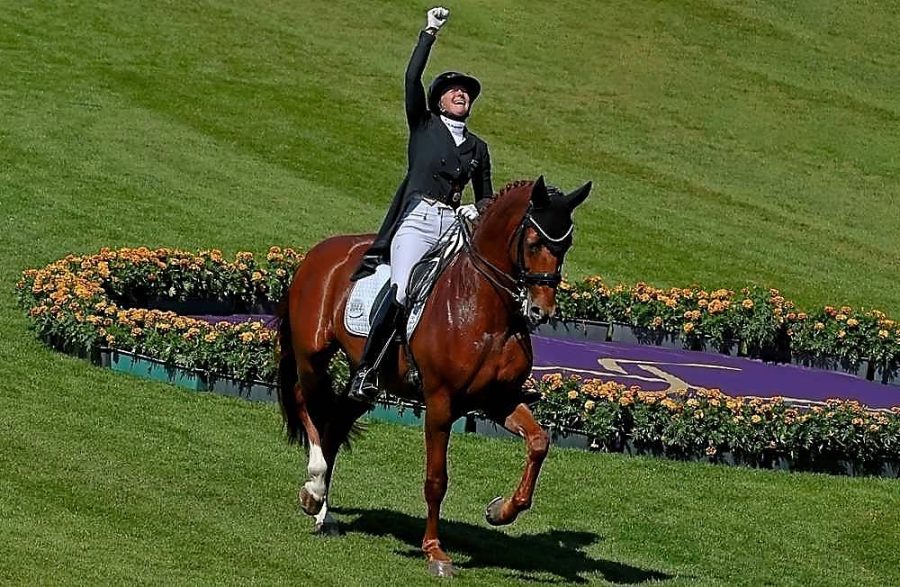
Dressage has changed dramatically in the two decades between the two major events this century at Aachen, Germany, the world’s premier equestrian show grounds.
Comparisons over two decades are not easy. Breeding may have shrunk as an industry but quality has markedly changed. Costs of much in the equestrian world have sky rocketed. Horse healthcare options have vastly expanded. And behavior toward horses have been under greater scrutiny than ever before.
Changes in dressage between the 2026 World Championships and the 2006 World Equestrian Games were essentially the same championship except for the names. Even the number of entries were about the same, close to 90 horse and rider combinations.
This year saw three scores above 80% in the Grand Prix while the highest score in the same competition in 2006 was 76.333%.
Another 31 riders and riders scored above 70% and only two were below 60% this year. In 2006, 16 pairs were above 70% and 17 were below 60%.
There were entries from 34 countries this year, up from 29 in 2006 when Russia, Belarus and Ukraine were represented, though not this year.
One element was unchanged–Isabell Werth was on the gold medal teams in both 2006 and 2026.
Isabell, with decades of experience that has made her the most successful equestrian in history and as president of the International Dressage Riders Club, has worked with the FEI–the International Equestrian Federation–on many aspects of the dressage re-set, including riding some of the new tests.
Changes that are designed to sweep through dressage will be featured at the year-end FEI General Assembly–the governing body of international horse sports including the three Olympic disciplines of dressage, eventing and jumping. The proposed changes will be accompanied by a report of a FEI task force headed by the USA’s George Williams to point dressage toward its future.
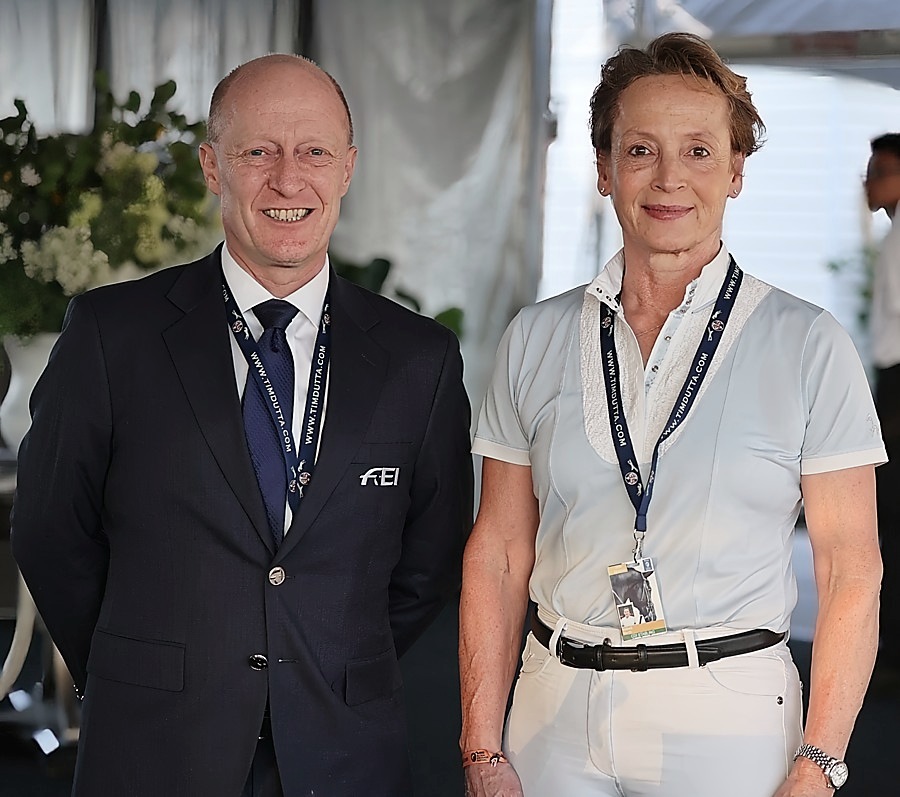
Coordinating the rewrite of the rules, tests, procedures–including new approaches to judges and judging–has fallen on Ronan Murphy director of the FEI’s dressage department (as well as para dressage and vaulting).
“We always maintained it’s not a revolution we need, but an evolution of the sport,” said the Irish official who joined the FEI 3 1/2 years ago, in time to meet the challenges facing horse sports, especially dressage, and to help come up with solutions.
The Aachen championships, he told DRESSAGE-NEWS.com, displayed the changes for the better.
“In the past, when we’ve been criticized externally many inside the sport feel very aggrieved at that because they say, ‘but we don’t understand, because, they say, we really look after our horses and we really present them in a good way.’ And I have to say that that’s what I see.
“I see that the passion and commitment that dressage athletes have for their horses is unbelievable and they really, really are focused on that because the sport, by its nature, is to be presented without tension. I think it’s as simple as that. I think that’s now what we’re seeing. What was presented (in Aachen), it just gave me great encouragement. I felt, yes, the message is working, but only because the community is collectively responsible for this and they are delivering that. And I think that’s a beautiful thing to see. We talk about the goosebumps, but it really was.”
The sport, he said, has to continue to deliver all the time at all levels that has resulted from “clear and robust processes” involving officials and stewards working collectively with all levels.
“It’s that collective effort, I guess, that’s really important for the sport. And we must continue to evolve.”
One key is application of technology–adopted by some other Olympic sports especially those with panels of judges similar to dressage–to assist with the judging and assessment, and also to assist athletes reviewing tests or training.
“ Every successful business has a mission statement, and ours for dressage was defined on the 1st of October,” said Ronan. “It actually had been defined many, many years before, but somehow, the sport has deviated a little bit from that, and now we’ve realigned. We mustn’t accept any deviation from that.”
The goal is to launch in early 2027 what is decided at the General Assembly in December.
As with any strategic planning process, Ronan said, the first stage is to agree and produce a plan.
Then, he said: “We would be very focused on the implementation process, timed goals and objectives across all the different strategic focus areas, but ensuring that not only with the technical committee, which is the central driver of the process, but also that we would have a steering group to ensure we implement and remain on track. And continue to use this process collaboratively with our key stakeholders to ensure that we can adapt and be flexible. Because a plan for three to five years in isolation, things happen and external environment changes, and we have to be adaptable and agile to react to that. And that’s really key for the sport.”
He admitted that proposals had not always been communicated well “because it is technical, and those of us who are living it every day are so involved in it, we can talk all day about it. But actually, it’s the most important thing is that we explain to everybody, to all our colleagues and friends, what exactly is happening, what the efforts are that are being made, where we’re going, and that we continue to listen. That if there is something that we need to address, we collectively do that. I think that implementing a plan gives us that pathway and process to do that.”
Reviewing and categorizing judges and judging that are central to the sport includes what Ronan described as “a very detailed database” of 25 million records on scores awarded over the last 10 years and maintained by the FEI.
A data analyst has become involved in helping assess accurately judges scores–including nationalities of judges and riders, the position around the arena of judges as well as individual movements.
The FEI will develop a dashboard to “not just evaluate our judges but to educate the judges and to assist with their progression.”
More individuals, including younger judges, would be welcomed to the sport not only in areas of the world where dressage is well established but to meet a goal of expanding to places that do not have the same history.
“I think it’s a responsibility of us to the sport to ensure that the judges we have are fully up to speed with what we’re assessing and aligned with what we’re assessing,” he said. “And in a global sport with many different countries and a very busy calendar, that’s not an easy task. You have to ensure that you have consistency.”