Sept. 3, 2026
By KENNETH J. BRADDICK
The spectacular success of dressage at the World Championships has helped set the stage for a top-to-bottom overhaul of the sport at year’s end.
Judging, including a rewrite of the judge’s manual focused on harmony and self-carriage, FEI possibly taking over from organizers assignment of judges to competitions as low as CDI4*s, changing international tests from young horses to Grand Prix.
A full rule revision by the governing FEI General Assembly will be undertaken in December as well as release of strategic planning by a group of some of the top figures in dressage headed by USA’s George Williams to develop comprehensive action for the future of the sport.
The developments aim to raise dressage to a pursuit broadly approved by both the general public and knowledgeable fans and participants. Key is treatment of horses. It comes after suspensions over the past three years of riders and trainers around the globe with Olympic and championship experience for ill-treatment of equine partners. And events the world over have witnessed scenes that have brought condemnation, forcing dressage in particular to view critically its appearance.
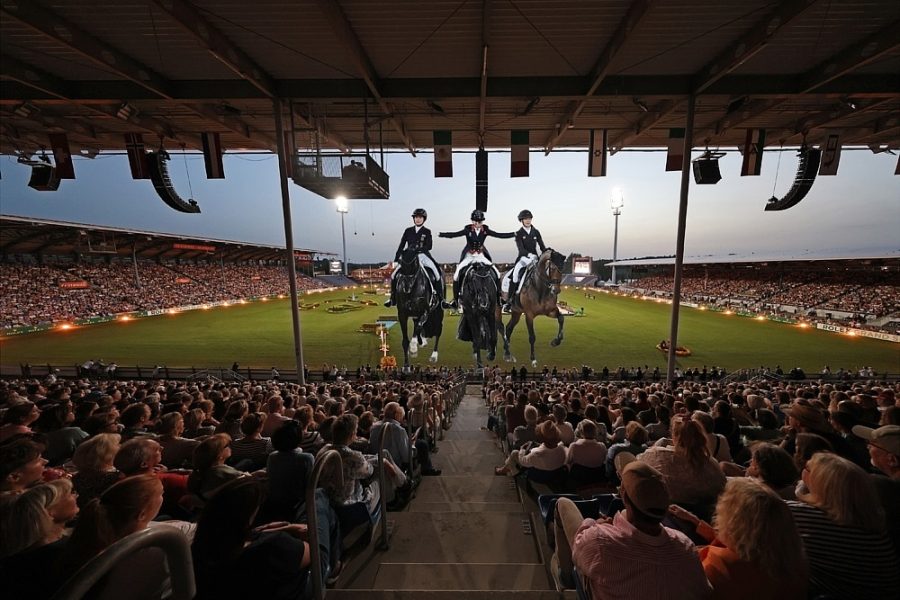
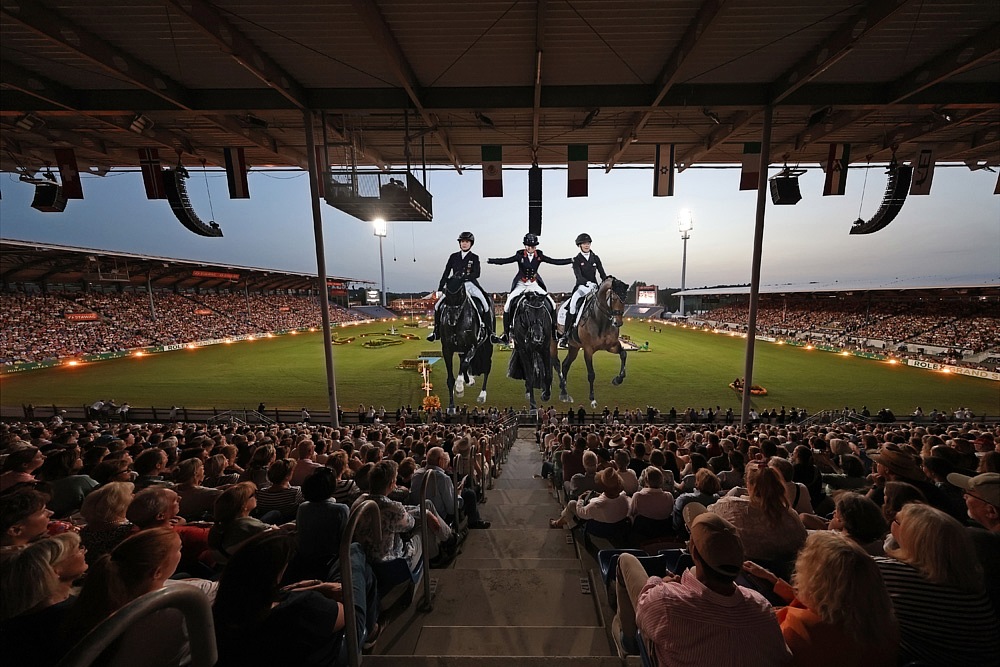
The success of the World Championships went beyond the show grounds that host the globe’s premier equestrian event every year as it has for many decades or the superb organization and operation to manage half a million spectators of six international disciplines–dressage, driving, eventing, jumping, vaulting and para dressage–over two weeks.
“I think we’re on a journey, and we have been on that journey for the last couple of years,” said Ronan Murphy, the FEI director of dressage, para dressage and vaulting. As an individual outside of the FEI, he took over management of the three disciplines three years ago at a time when horse sports, particularly dressage, faced criticism so severe talk of being removed from the Olympics soon became widespread.
“I’m very, encouraged with what we’ve seen here, and not just because it was more aligned with what we’re looking for in dressage, or the object of dressage, which is about harmony and self-carriage and no tension, but we’re seeing it now globally at this level. So the athletes and trainers are really, really focused on producing the horses in that way.
“We’re seeing so many countries and so many performances here that were a model, a role model for people to look at.
“I mean there are so many role models that we could say that’s what we want to see. And I’m encouraged that the athletes and the horses and the trainers are working in that way, but I’m also encouraged that the judges are judging in that way. And I think this has been key.
“We’ve always said that in order to move the dial on the sport, we need a collective effort from everybody. And here, I really have been encouraged by that at the very top of the sport, under intense competition environment, but really beautiful dressage. And I think the crowd, a very knowledgeable audience in Aachen, but I think they really made it special because they were so engaged.
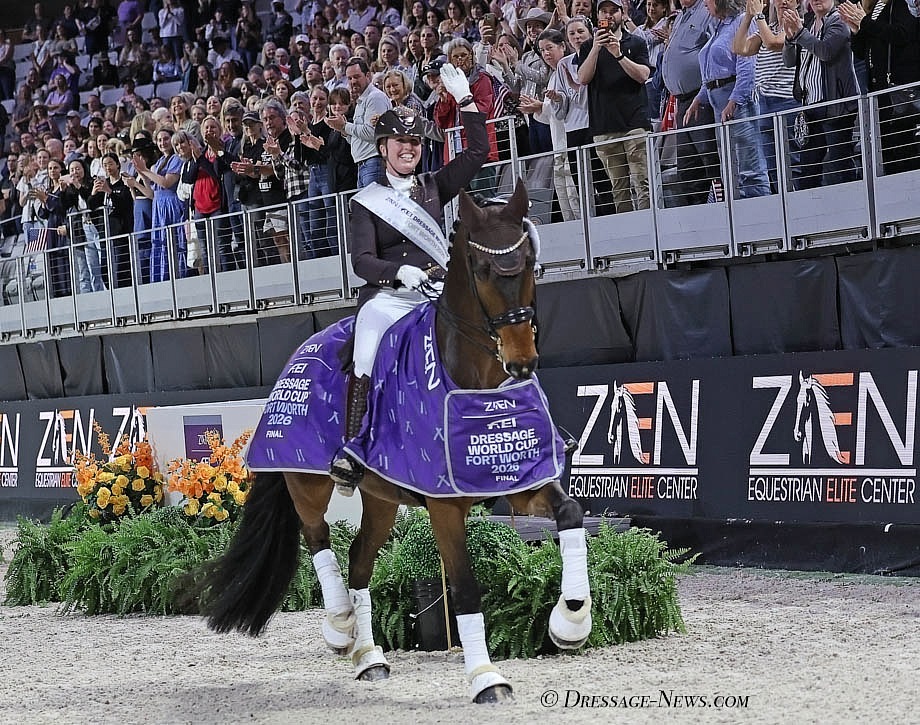
“We’ve seen it also in Fort Worth, we’ve seen the engagement of the audience there, the spectators with the sport. I’m very encouraged by that. I think that’s what we want. But we always, there’s never an end to this, we have to keep producing, riding, training in that way. And that has to be the goal for everybody.”
Now, the focus will be on the Olympics in Los Angeles in 2028, though for senior riders next year there are the newly created Pan American Championships in Ocala, Florida next January, the European Championships in Denmark in August and the Pan American Games in Peru in mid-summer.
The World Championships, he said, were at the top of the sport.
“We want to see that all the way down; we want to see it at three-star, two-star level, athletes that are coming to international for the first time that they really produce and ride in this way.
“We have to have a new focus that everyone must continue to support because that’s what we want.”
“It’s imperative that everybody works together to deliver that and that for me is the biggest point.
“We cannot be complacent about the sport. And what really encourages me here is that the external, maybe some of our critics of the sport, shall we say, are also being more kind because they’re seeing a transition. And I think that’s very encouraging for our athletes who have weathered the storm that for a number of years has (created) a feeling that it’s been unfairly targeted at dressage.”
Dressage as displayed increasingly at the top of the sport since the 2024 Olympics in Paris now needs to permeate through the pyramid down to the levels where most riders are.
“That’s where we need to ensure that the ideals and culture are ingrained in all levels of training, whether you’re doing a medium test at national level or whether you’re doing a Grand Prix freestyle in Aachen,” Ronan said. “ It’s the same ideals, and I think that’s the next big responsibility. We really rely on our national federations to assist with that.
“I think one of the key things is that our sport has been shown to a wider audience. And so many people have come back with so much positivity about what happened. But that’s because obviously we spoke with a knowledgeable audience in Aachen, but also the way the sport is being presented. And people are understanding that.
“We’re continuing to communicate that in a collaborative way with everybody. And you know, I think that’s the key thing information is key, and we have a duty, all of us, to explain and to discuss and to learn. And you know, the last couple of years have probably given us that opportunity to look at our sport. I always maintained that the planning process around dressage is not solely about wellbeing or welfare of horses, but it’s an opportunity for us to look at the sport holistically.
“The wellbeing and welfare of our horses is absolutely the key central tenant of everything we do, but there are many other things. And this process has given us an opportunity to really look at that. And traditionally, you know, we’ve been criticized for being quite conservative and slow to change, but I think this brought a kind of communal effort into addressing the sport holistically. And that’s what I’m encouraged about.
“We need to keep being brave with that because we need to keep looking at the formats, we need to keep looking at how we can engage a wider audience, how we can make it more interesting, all of those things, so that we ensure the sport is more understandable from an assessment point of view, that we’re able to relate how we appoint judges, how we translate scores. How the freestyle is scored, so that people who are maybe not involved in the sport can also understand and enjoy the spectacle that we all are so passionate about.”